


THE GREAT SWISS ESCAPE
Updated: Jun 21
Swiss traditions and identity viewed from Japan
So, here's a fun fact: around 11% of Swiss citizens live abroad. That's right – roughly one in ten people born in the land of cheese, Toblerone, and punctual trains have packed their bags and said "Thanks, but I'm off."
And the trend is up.
Now, this might come as a shock. After all, Switzerland is often seen as an Alpine utopia (albeit an expensive one!) – a place where cows wear bells, mountains look like postcards, and everything runs so smoothly it's suspicious. But apparently, even paradise has an exit door.
So why leave heaven?
Well, some Swiss folks just want a bit more spice in life. Maybe they fell in love with someone from another country. Maybe they fell in love with another country. Or maybe they just wanted a break from a society where dropping your fondue fork is a felony.
Others are driven by the spirit of adventure, which in Swiss terms means voluntarily entering a world where trains are late, cheese is pasteurised, and people don’t sort their recycling into 47 categories. I know – crazy, right?
Those who leave the Alpine nation become part of the "Swiss Abroad", also known as the “Fifth Switzerland”. Why fifth? Because the first four are the official language regions: German, French, Italian, and Romansh. The fifth is the global Swiss diaspora – basically, Switzerland’s international fan club, but with voting rights.
They’re represented by the Organisation of the Swiss Abroad (OSA), which ensures they can still vote in federal elections and referendums. So yes, they may be sipping sangria in Spain or dodging kangaroos in Australia, but they still get to weigh in on whether cows should wear reflective vests.
It's kind of nice to have your say over something thousands of miles away that will actually never affect you - unless you return to the homeland, of course.

Moving abroad is an exciting but often also challenging experience.
When you emigrate, you basically hit the "shuffle" button on your entire life. You leave behind your family, your friends, your favourite bakery that knows your order by heart, and the comforting ability to understand street signs. In exchange, you get a thrilling mystery box called "your new everyday life", which may or may not include surprise ingredients like culture shock and existential confusion.
As you settle into your new surroundings, you'll likely embark on the emotional rollercoaster known as the assimilation process – a four-phase journey that starts with wide-eyed wonder and ends somewhere between "I think I've got this" and "Why am I crying in a supermarket?"
So, let's break it down:
The honeymoon phase
Everything is magical. The food! The people! The fact that your local bakery sells bread shaped like dinosaurs! You often interact with the new environment without much critical analysis. You're basically starring in your own travel documentary.
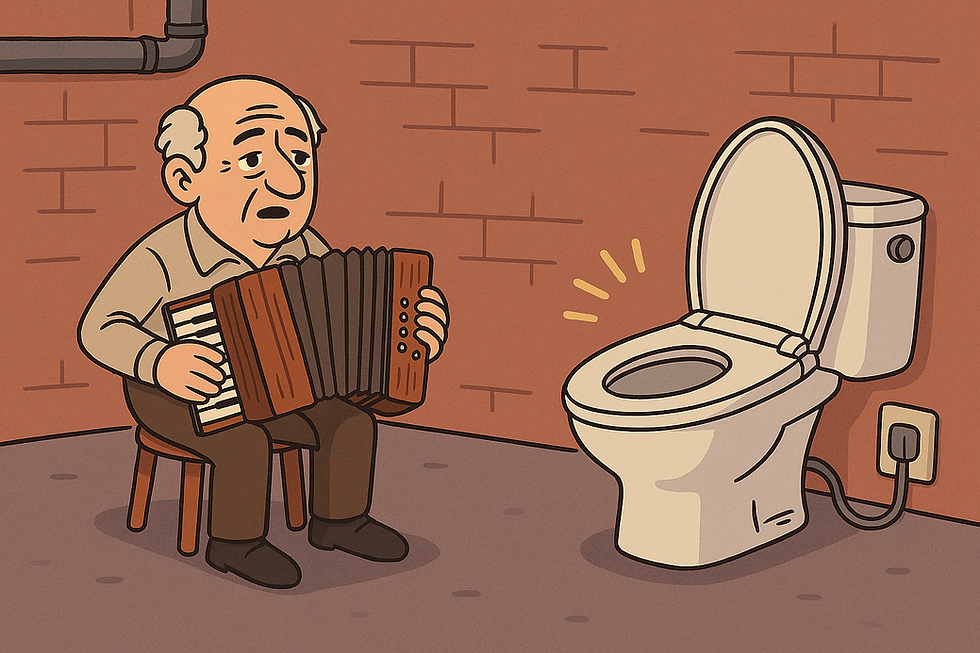
In Japan: You’re amazed by vending machines that sell hot meals, toilets that talk to you, and the fact that people bow more often than they blink.
The frustration phase Reality hits. Frustration manifests itself when initial difficulties with the new language, cultural norms and social conventions become more noticeable. You try to say, "thank you" and end up inviting someone to your wedding. You miss Swiss efficiency like you miss oxygen.
In Japan: One moment you realise that things run even more efficiently here than back home, wondering how that is even possible. The next, you forget your phone at home and suddenly find yourself standing in the supermarket unable to translate the product labels. You spend 20 minutes trying to figure out if the bottle in your hand is soy sauce or motor oil.
The assimilation phase You start to get it. You learn the rules, the customs, and how not to offend people by standing in the wrong spot on the escalator. You still mess up, but now you laugh about it instead of crying in the shower.
In Japan: You bow at the right angle (most of the time), and you know which convenience store has the best onigiri. You can survive a trip to the post office without Google Translate, and you've accepted that "maybe" actually means "no", and "no" might mean "maybe". You still spend an hour in the local supermarket trying to locate the pasta aisle, but now you do it with dignity.
The integration phase You've taken your Swiss roots – orderly, efficient, quietly proud – and stirred them into the rich broth of Japanese culture. You've successfully introduced raclette to your in-laws' household, while embracing cherry blossom viewing like a pro. The result? A global fondue of identity that's both comforting and complex. In Japan: You eat natto without gagging – a badge of honour few expats earn. You understand train announcements, nodding knowingly as if you were born understanding them. You bow instinctively and have mastered the art of blending in while standing out. You've made it – not because you've become Japanese, but because you've found a way to be fully yourself in a place that once felt foreign. You're not just surviving; you're thriving.
Bonus phase – the eternal loop Japan: Just when you think you've cracked the code, Japan throws you a curveball. You realise that after Phase 4, you don't graduate. You loop back to Phase 2. Then 3. Then 4. Then 2 again. It’s like emotional Groundhog Day, but with sushi, seasonal festivals, and vending machines that sell umbrellas. But you're not stuck – you're evolving. After 29 years, you might be on Cycle #97, but who's counting? Japan keeps surprising you. It's a country that never fully unfolds, no matter how long you live here. And that's the beauty of it: the loop isn't a trap – it's a dance.

Rolf, are you saying you still gag when eating natto? Even after 27 years of living in Japan? 🤣 Personally, I have come to appreciate natto because it is stinky like a Swiss cheese. 😂